
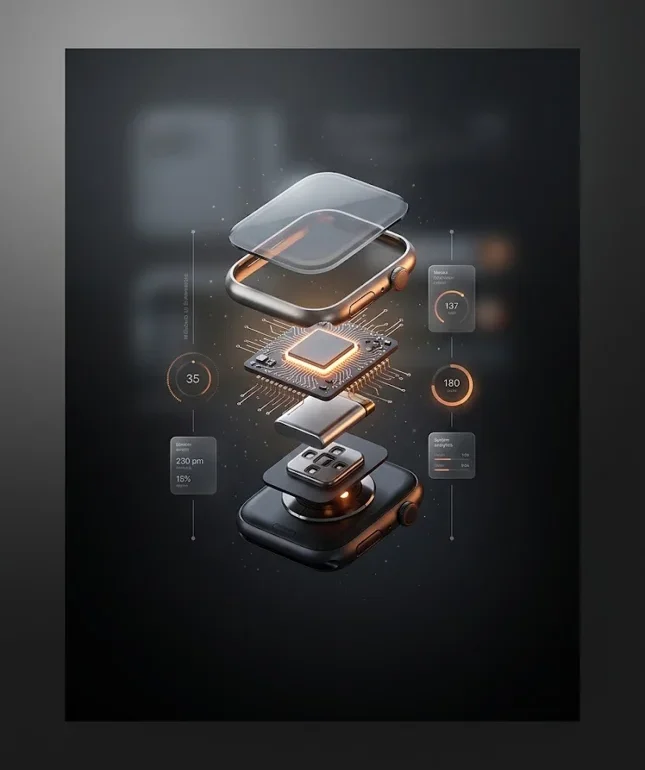
iFixit tears down Apple Watch Series 12 and Ultra 4 finds mixed repairability results that have sparked intense debate across the 2026 tech landscape. Concluding their highly anticipated teardown sequence for Apple’s latest September wearable launches, the experts have finally published their definitive look inside the newest smartwatches.
 Apple Watch Series 12 and Ultra 4 iFixit Teardown Results
For independent repair technicians and DIY enthusiasts, these internal hardware reveals are critical. The global community closely monitors the official iFixit smartwatch teardown results to see if Apple has made any meaningful strides toward user-friendly maintenance and sustainable hardware design.
Unfortunately, for those hoping for a modular revolution, the internal architecture remains largely unchanged. When the team at iFixit tears down Apple Watch Series 12 and Ultra 4 finds mixed repairability results, it highlights a persistent reliance on industrial adhesives.
What Happens When iFixit tears down Apple Watch Series 12 and Ultra 4 finds mixed repairability results
The teardown process of the rugged Ultra model began with an intense glued display removal process. After applying targeted heat to the Ultra 4’s screen, technicians had to use a specialized metal pick to pry the fragile glass open carefully, eventually exposing the internal battery and the Taptic Engine.
One of the biggest frustrations noted was the Apple Watch Ultra 4 battery replacement procedure. Replacing the upgraded 2.444 Wh battery (a slight increase from the 2.313 Wh unit found in the Ultra 3) still strictly requires removing the delicate screen first. This remains a significant structural drawback for longevity.
Interestingly, the four visible screws on the bottom of the titanium case offer very limited access. Removing them only provides entry to the underside sensor assembly and the new S11 processing chip, leaving the battery trapped behind the glued display.
“Despite minor internal tweaks, the mandatory glued display removal process remains a terrifying hurdle that discourages everyday users from attempting at-home repairs.”
However, once the screen is successfully unglued, the rest of the teardown is manageable. Removing the battery and disconnecting the display’s press connector is straightforward, provided the technician avoided slicing the fragile flex cables underneath during the initial prying stage.
| Apple Watch Model | Battery Capacity | Primary Entry Method |
|---|---|---|
| Apple Watch Ultra 3 (2025) | 2.313 Wh | Adhesive / Glued Screen |
| Apple Watch Ultra 4 (2026) | 2.444 Wh | Adhesive / Glued Screen |
| Apple Watch Series 12 (46mm) | 1.461 Wh | Adhesive / Glued Screen |
Why iFixit tears down Apple Watch Series 12 and Ultra 4 finds mixed repairability results in the Base Model
Moving to the mainline flagship, the teardown of the new Apple Watch Series 12 actually revealed a slight, yet welcome, repairability improvement. Apple engineers have finally added a stretch-release adhesive and a convenient pull tab for the internal cell.
This design choice makes removing the 1.461 Wh battery significantly easier once you are inside the chassis. Yet, just like its rugged sibling, the Series 12 demands prying off the glued OLED display to gain internal access, severely dampening the excitement.
Technicians noted that the manufacturing tolerances around the Series 12’s display are even tighter than on the Ultra 4. This requires applying an uncomfortable amount of force, making experts highly concerned about permanently damaging the screen during a routine battery swap.
Reviewing the Apple Watch Series 12 repairability score
Another major shift discovered when iFixit tears down Apple Watch Series 12 and Ultra 4 finds mixed repairability results relates to the display cables. Apple has officially replaced the fragile ZIF connector and tape used on older models with a much simpler press connector.
The unfortunate tradeoff to this streamlined design is that replacing the screen now also mandates removing and replacing the battery simultaneously. As the teardown engineers noted, if you have gone through the trouble of opening the watch, replacing the battery makes logical sense anyway.
Ultimately, these minor internal adjustments resulted in a final Apple Watch Series 12 repairability score of 4/10. While still a painfully low grade, it represents a 1-point bump from the last base-model Apple smartwatch evaluated by the platform.
“While competitors are actively embracing modular hardware designs with mechanical screws, Apple continues to rely heavily on industrial adhesives, deeply frustrating the right-to-repair community.”
Pixel Watch 5 vs Apple Watch repair: A Stark Contrast
To truly understand why the tech community is frustrated, one must look at the Pixel Watch 5 vs Apple Watch repair landscape. When comparing the two tech giants, Google is currently leaps and bounds ahead in terms of sustainable smartwatch design.
For direct context, iFixit recently awarded Google’s Pixel Watch 5 an incredibly impressive 9/10 repairability score. The primary reason? Its display can be easily removed by unscrewing just two standard Torx screws and lifting a reusable gasket.
Furthermore, the Pixel Watch 5 battery can be extracted without fighting through layers of stubborn industrial adhesive. This modular approach makes the fact that iFixit tears down Apple Watch Series 12 and Ultra 4 finds mixed repairability results even more disappointing for iOS users.
| Smartwatch Device | Screen Removal Method | Final Repair Score |
|---|---|---|
| Apple Watch Ultra 4 | Heat and Metal Pick (Glued) | 4 / 10 |
| Apple Watch Series 12 | Heat and Metal Pick (Glued) | 4 / 10 |
| Google Pixel Watch 5 | Two Torx Screws & Gasket | 9 / 10 |
If you want to view the full surgical teardown process, you can find the complete video analysis and step-by-step documentation on the official iFixit repair guides portal.
Ultimately, the news that iFixit tears down Apple Watch Series 12 and Ultra 4 finds mixed repairability results proves that Apple is taking baby steps toward sustainability, but the dreaded glued display remains the ultimate barrier to consumer-friendly repairs.
7 Frequently Asked Questions
 Smartwatch Repairability Comparison: Apple Watch vs. Pixel Watch 5
What was the final Apple Watch Series 12 repairability score?
The Series 12 received a 4/10 repairability score, which is a slight 1-point improvement over previous base models due to new battery pull tabs.
Did the Apple Watch Ultra 4 improve its repair score?
No, the Apple Watch Ultra 4 retained the exact same 4/10 repairability score as its predecessor, the Ultra 3.
Why is the Apple Watch Ultra 4 battery replacement so difficult?
To reach the battery, technicians must carefully apply heat and use a metal pick to slice through industrial adhesive to remove the fragile display without breaking it.
What does the headline ‘iFixit tears down Apple Watch Series 12 and Ultra 4 finds mixed repairability results’ actually mean?
It means that while Apple introduced minor internal improvements like simpler battery pull tabs and press connectors, the incredibly risky glued-screen removal process ruins the overall repair experience.
Are the four screws on the back of the Ultra 4 useful for battery swaps?
No, removing the four bottom screws only grants access to the sensor assembly and the S11 chip, not the battery cavity.
How does the Pixel Watch 5 compare to the new Apple Watches?
The Pixel Watch 5 vastly outperforms Apple in this area, scoring a 9/10 because it uses standard Torx screws and a gasket instead of harsh adhesives.
What changed with the display connectors in the Series 12?
Apple replaced the older, fragile ZIF connector and tape with a much simpler press connector, making reassembly slightly easier.
Disclaimer: This article is for informational purposes only. Attempting to repair electronic devices without proper training and equipment may void your warranty, cause severe bodily harm, or result in permanent damage to the hardware.