
AMD winds up Zen 6 cores for faster clock speeds, and the technology sector is absolutely buzzing with excitement in 2026.
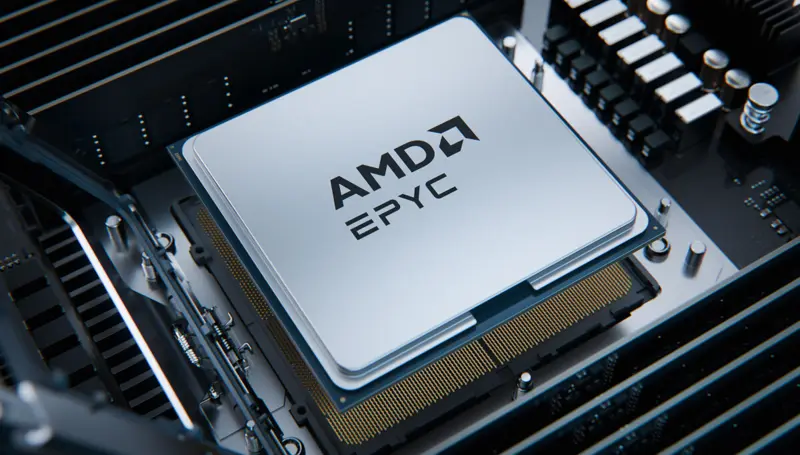 AMD winds up Zen 6 cores for faster clock speeds
After more than a year of teasing its highly anticipated 256-core Epyc processors, the company is finally pulling back the curtain on its architectural masterpiece.
These internal changes not only make massive core counts possible but will eventually power the highly anticipated next-generation Ryzen processors in both desktop and mobile PCs.
By optimizing power delivery and architectural efficiency, AMD winds up Zen 6 cores for faster clock speeds, reaching an impressive 5.3 GHz on select premium SKUs.
Why AMD winds up Zen 6 cores for faster clock speeds in 2026
During a recent press event in Las Vegas, the tech giant revealed that the new architecture delivers a stunning 20 to 31 percent instructions per clock (IPC) uplift.
This massive Epyc CPU performance uplift is particularly noticeable across dynamic cloud workloads and heavy data processing tasks.
Because CPU performance relies heavily on power, IPC, and frequency, the fact that AMD winds up Zen 6 cores for faster clock speeds means we are looking at one of their biggest generational jumps ever.
“CPU performance is a function of power, IPC, and clocks, and with gains across all three, the new cores are shaping up to be a historic architectural milestone.”
The front-end design received a major overhaul. While the previous generation utilized a dual front end that struggled slightly with dynamic loads, the new design handles bipolar workloads beautifully.
This ensures that as AMD winds up Zen 6 cores for faster clock speeds, the processor pipeline remains constantly fed with instructions, maximizing throughput.
| Processor Feature | Zen 5 Architecture | Zen 6 Architecture |
|---|---|---|
| Maximum Core Count | 192 Cores | Up to 256 Cores |
| Top Clock Speeds | Under 5.0 GHz | Up to 5.3 GHz |
| Average IPC Uplift | Baseline | 20% to 31% Increase |
Understanding the Zen 6c vs Zen 6 architecture split
Just like previous generations, this new processor family comes in two distinct flavors: a frequency-optimized variant and a density-optimized version known as Zen 6c.
This design philosophy allows the manufacturer to pack an incredible number of cores into a single silicon die without sacrificing the shared Instruction Set Architecture (ISA).
When AMD winds up Zen 6 cores for faster clock speeds, it gives the standard variant shallower queues to clock higher on less power.
Conversely, the Zen 6c version utilizes deeper queues in its distributed scheduler to compensate for slightly lower frequencies, making it perfect for high-latency server tasks.
How AMD winds up Zen 6 cores for faster clock speeds and AI dominance
For those running intensive machine learning tasks, AVX-512 and AI acceleration have received significant upgrades in this generation.
The new chips now natively support FP16 datatypes without needing to pad the data to FP32, drastically improving precision performance.
Furthermore, the engineers doubled the VNNI-INT8 pipes from two to four, effectively doubling the throughput for compatible enterprise AI workloads.
“By natively supporting FP16 datatypes and doubling VNNI-INT8 pipes, the architecture proves it is built from the ground up for modern AI computing.”
You can read more about these deep architectural shifts on the official AMD architecture updates page.
The Venice server processor cache advantage
One of the most crucial improvements involves the Venice server processor cache hierarchy. In older density-optimized chips, users had to sacrifice some cache.
Now, regardless of whether you choose the standard or compact core, the L3 cache remains a constant 4 MB per core.
This consistency ensures developers do not have to worry about different ISAs or cache bottlenecks when optimizing software, offering a massive advantage over Intel’s fragmented P-core and E-core approach.
| Cache & Core Design | AMD Approach (Zen 6) | Competitor Approach |
|---|---|---|
| Instruction Set Architecture | Unified across all cores | Split between performance/efficiency |
| L3 Cache Per Core | Constant 4 MB per core | Varies by cluster and core type |
| AVX-512 Support | Supported on all core types | Limited or unsupported on E-cores |
As AMD winds up Zen 6 cores for faster clock speeds, the combination of unified cache, massive core counts, and unmatched AI acceleration creates a truly formidable processor lineup.
Frequently Asked Questions
Why is it important that AMD winds up Zen 6 cores for faster clock speeds?
Higher clock speeds directly translate to better single-thread performance, which is crucial for gaming, rapid data processing, and maintaining system responsiveness under heavy loads.
What is the main difference in the Zen 6c vs Zen 6 architecture?
Zen 6 is optimized for high frequency and lower power per clock, while Zen 6c is density-optimized to pack more cores into a smaller physical footprint for massive server scaling.
How much IPC gain does the new architecture provide?
The new architecture delivers an impressive 20 to 31 percent Instructions Per Clock (IPC) uplift, particularly in cloud and enterprise workloads.
How does the Venice server processor cache work in this generation?
Unlike past generations, both the standard and compact cores maintain a constant 4 MB of L3 cache per core, simplifying software optimization.
What improvements were made for AVX-512 and AI acceleration?
The architecture now natively supports FP16 datatypes and has doubled the VNNI-INT8 execution pipes, drastically boosting AI workload throughput.
Will these upgrades come to next-generation Ryzen processors?
Yes, while initially launching for enterprise Epyc servers, this underlying architecture will eventually power consumer desktop and mobile Ryzen CPUs.
How does this core design compare to Intel’s current strategy?
AMD uses a unified Instruction Set Architecture across all cores, meaning software runs identically on all of them, whereas Intel splits its workloads between differing P-cores and E-cores.
Disclaimer: This article is for informational purposes only. The hardware specifications and performance metrics mentioned are based on press event announcements and pre-release data, which may be subject to change prior to commercial launch.