
Hugging Face’s New AI Model Lets You Chat With DNA, revolutionizing the way researchers and individuals interact with genomic sequences in 2026. The world of bioinformatics has historically been dominated by complex numerical models and massive computational requirements. However, the recent release of Carbon-X fundamentally changes this paradigm, translating the intricate language of biology into conversational natural language.
 Hugging Face’s New ‘Carbon-X’ AI Model Makes It Possible on Your Laptop!
Developed in collaboration with leading researchers from the Zhongguancun Academy in China and the University of Naples Federico II in Italy, this open model represents a massive leap forward. By bridging the gap between raw genetic data and plain English, Hugging Face’s New AI Model Lets You Chat With DNA directly from your local hardware, making genetic research more accessible than ever before.
The “ChatGPT for DNA”: Hugging Face’s New AI Model Lets You Chat With DNA
For decades, understanding the human genome—a massive sequence of 6 billion letters (A, C, G, and T)—has felt like deciphering an alien programming language. While scientists have successfully sequenced the genome, understanding the functional impact of every specific sequence remains a monumental challenge. Now, Hugging Face’s New AI Model Lets You Chat With DNA, acting as a conversational interface for biology.
Carbon-X achieves this by integrating both DNA and natural language processing. The development team took an existing language model and expanded its vocabulary to read DNA in groups of six letters. Following this, the model underwent extensive training on 300 billion tokens, linking raw sequences to biological descriptions.
By integrating 300 billion tokens of DNA sequences and English text, Carbon-X unlocks a conversational capability that makes genetic interpretation accessible even to nontechnical users.
Because Hugging Face’s New AI Model Lets You Chat With DNA, users can simply ask questions about the potential effects of specific DNA changes on gene activity and overall health, receiving easy-to-understand, conversational answers in return.
| AI Biology Model | Output Format | Key Capability |
|---|---|---|
| AlphaGenome (DeepMind) | Numeric | Predicts effects of genetic mutations |
| Evo 2 (Arc Institute/Nvidia) | Genomic Data | Generates entire genomes from scratch |
| Carbon-X (Hugging Face) | Natural Language | Conversational interface for DNA analysis |
Privacy and Power: Why Hugging Face’s New AI Model Lets You Chat With DNA Safely
One of the most critical hurdles in genomic research is data privacy. Uploading identifiable or sensitive patient data to cloud-based frontier AI models poses significant security risks. Recognizing this, the developers ensured that Hugging Face’s New AI Model Lets You Chat With DNA safely on local hardware.
Carbon-X is intentionally designed as a small model with 14 billion parameters. This optimized size allows it to run locally on a standard laptop. No data is sent to Hugging Face or any third-party servers, ensuring complete patient confidentiality while researchers analyze disease-causing genetic mutations.
Limitations and Potential: Hugging Face’s New AI Model Lets You Chat With DNA
While it is incredible that Hugging Face’s New AI Model Lets You Chat With DNA, there are specific limitations users must understand. Currently, users cannot upload full human genomes. The model is trained to ingest DNA sequences of roughly 50,000 base pairs, meaning researchers must query smaller, targeted sections of the genome at a time.
Additionally, the developers of Carbon-X have issued a strong caution regarding the model’s current validation state. The AI’s predictions have not yet been thoroughly validated with actual wet lab experiments.
Carbon-X represents a massive leap in bioinformatics, but until its predictions are validated by rigorous wet lab experiments, it should be used strictly as a supplementary research tool.
Despite these early limitations, the fact that Hugging Face’s New AI Model Lets You Chat With DNA offers massive potential for the future of drug discovery and targeted genetic therapies. If scientists can accurately determine whether a genetic mutation is benign or disease-causing through a simple chat interface, the speed of medical innovation will increase exponentially.
| Advantages of Carbon-X | Current Limitations |
|---|---|
| Runs locally on a laptop for ultimate privacy | Cannot process full human genomes at once |
| Uses natural language (English) for accessibility | Limited to 50,000 base pairs per query |
| Aids in rapid genetic mutation analysis | Lacks extensive wet lab validation |
The Future Context: Hugging Face’s New AI Model Lets You Chat With DNA
The release of Carbon-X comes at a fascinating time for the company. Known essentially as the GitHub for AI models, Hugging Face provides vital infrastructure for the AI community. Recently, Nvidia agreed to acquire the company for nearly $13 billion, highlighting the immense value of open-weight platforms.
Ultimately, Hugging Face’s New AI Model Lets You Chat With DNA in a way that democratizes bioinformatics. As the model undergoes wet lab validation and potential future expansions, it stands to become an indispensable tool for geneticists and medical researchers worldwide.
Frequently Asked Questions
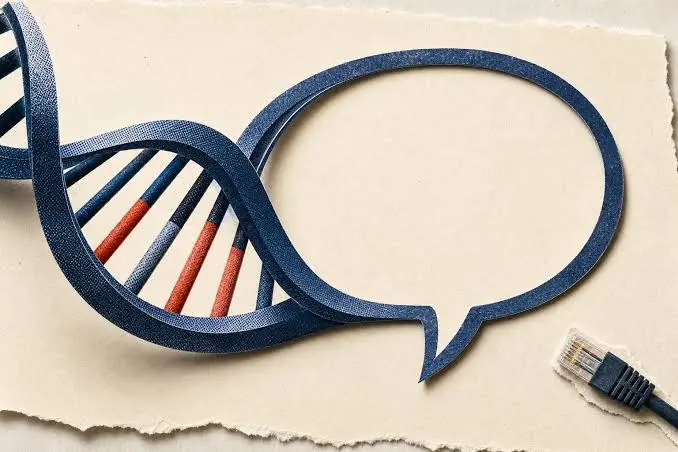 Hugging Face’s New ‘Carbon-X’ AI Model Makes It Possible on Your Laptop!
What does it mean that Hugging Face’s New AI Model Lets You Chat With DNA?
It means the Carbon-X model can translate raw genetic sequences into natural English, allowing users to ask conversational questions about gene activity and receive text-based answers.
Can I run the Carbon-X model on my personal computer?
Yes, the model was intentionally designed with 14 billion parameters so it can run locally on a standard laptop without relying on cloud computing.
Is patient data uploaded to the cloud when using this model?
No, because it runs locally, no sensitive genetic data is sent to Hugging Face or any other external company.
Can I upload a full human genome to Carbon-X?
No, the model is currently restricted to ingesting sequences of roughly 50,000 base pairs at a time.
No, the development team explicitly excluded viral DNA from the training data to prevent the model from being used for potentially dangerous applications.
Are the predictions made by Carbon-X medically verified?
Not yet. The developers caution that the model’s outputs have not been fully validated through actual wet lab experiments.
How does Carbon-X differ from DeepMind’s AlphaGenome?
While AlphaGenome predicts mutation effects in a numeric format requiring heavy compute power, Carbon-X uses a conversational natural language interface optimized for local use.
Disclaimer: This article is for informational purposes only, and we are not affiliated with any financial, medical, or governmental entity mentioned. Always consult qualified professionals for medical and genetic advice.